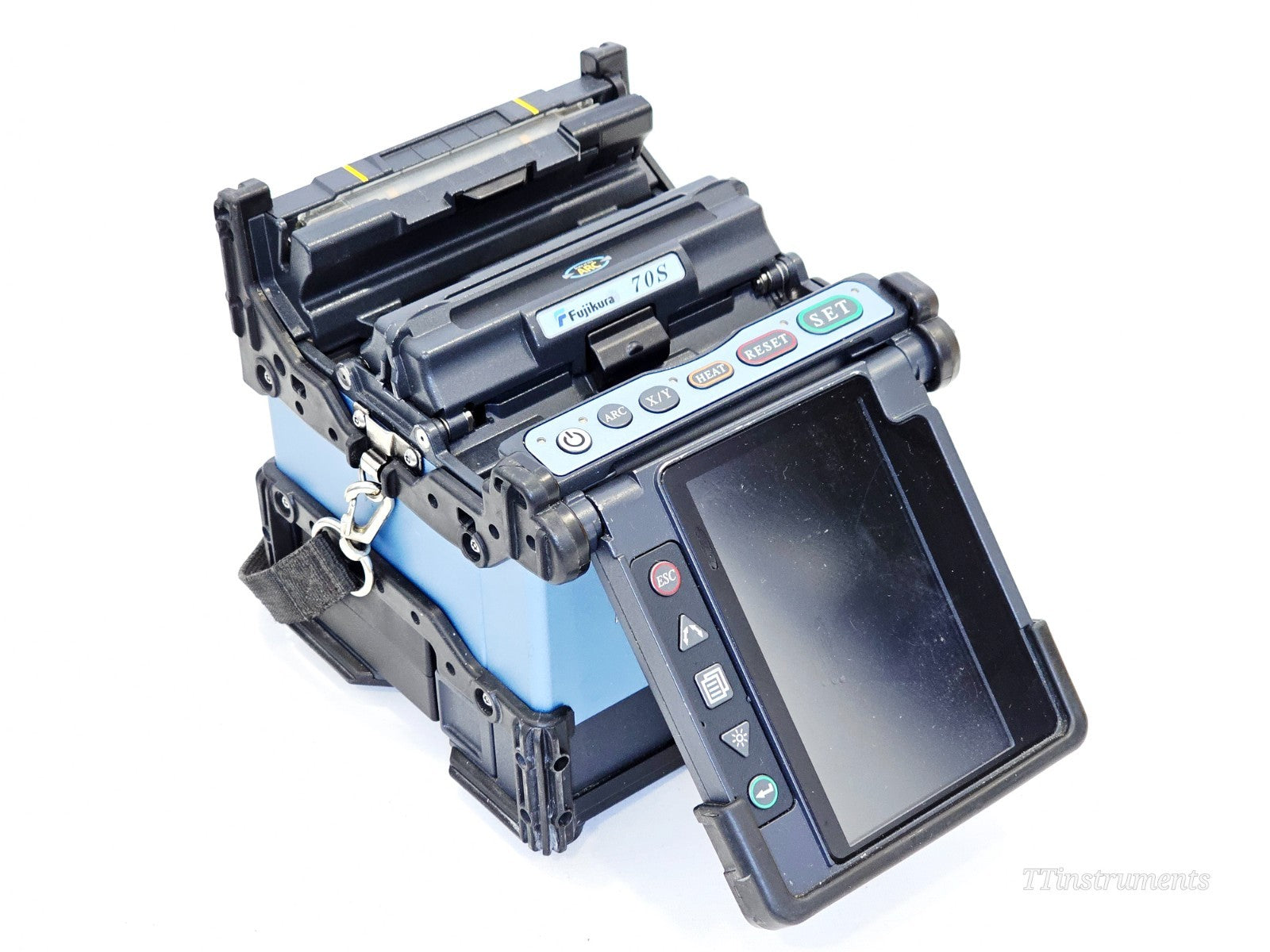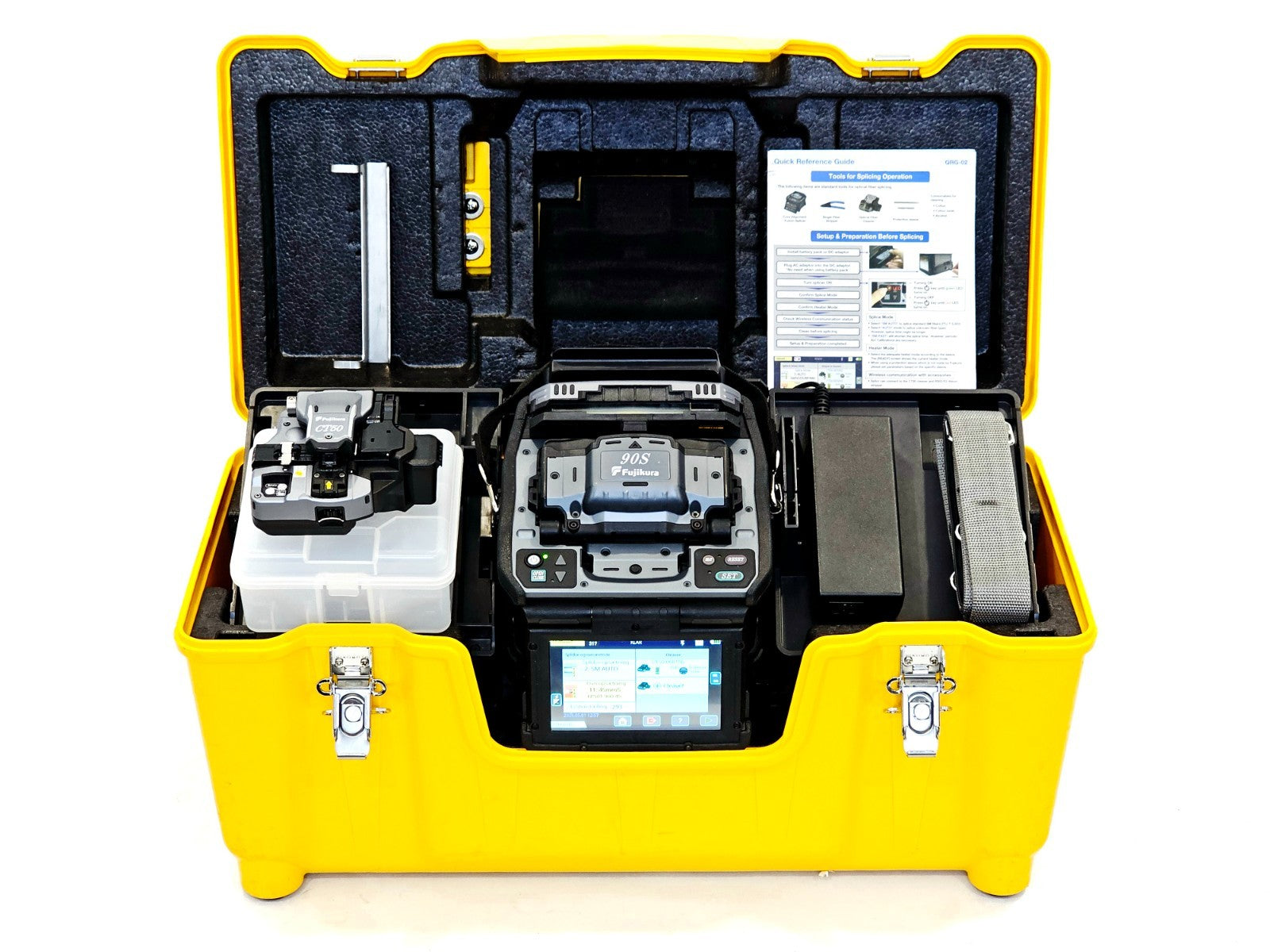
Fujikura Fusion Splicer Servicing. What It Means and Why It Matters
Fujikura Fusion Splicer Servicing, What It Means and Why It Matters
If you've been looking at refurbished Fujikura fusion splicers, you've probably come across listings that mention servicing in varying levels of detail. Some say "fully serviced," others mention a specific service centre, and some say nothing at all beyond "tested and working." Understanding what those terms actually mean, and why they matter, can make a significant difference to what you get when the unit arrives.
Why fusion splicers need regular servicing
Fusion splicers are precision instruments that operate in demanding field environments. Dust, fibre fragments, moisture and physical handling all take a toll over time. The internal components most affected by regular use are the V-grooves that hold and align the fibre, the electrodes that generate the arc, the camera lenses used for fibre alignment and splice inspection, and the battery.
Dust and fibre debris in the V-grooves is one of the most common causes of alignment errors and failed splices. Even a small amount of contamination in the groove can cause the fibre to sit slightly off-centre, producing poor splice loss results. Over time, without proper cleaning and inspection, this can become a persistent performance issue rather than an occasional one.
Electrodes degrade with use. As the arc count increases, the electrode tips wear down and the arc discharge becomes less consistent. This leads to variable splice quality, higher average splice loss, and increased error rates. Replacing electrodes at the appropriate point in the machine's life is a routine part of proper maintenance.
Camera lenses can accumulate contamination over time, affecting the clarity of the alignment image and the accuracy of splice loss estimation. Battery condition deteriorates with age regardless of arc count. And firmware, while not a hardware component, needs to be current to ensure the machine handles modern fibre types correctly and benefits from any performance improvements released since manufacture.
What Fujikura-authorised servicing involves
Fujikura's European service centre is based in Chessington, Surrey, and carries out service and repair work using factory-trained engineers, Fujikura-specific tooling and genuine factory parts. Authorised service centres that operate to the same standard use the same approach.
A proper service covers cleaning and inspection of all critical components, electrode replacement where required, camera lens cleaning, battery assessment, firmware verification and update where applicable, and a functional test to confirm the machine is performing to specification before it leaves the service centre. The service date is documented, and where applicable the next recommended service date is noted.
This is meaningfully different from a unit that has been cleaned externally and tested to confirm it powers on and performs a splice. A thorough service addresses the internal components that affect long-term performance and reliability, not just the visible surface condition.
What to ask when buying refurbished
When reviewing a refurbished Fujikura listing, a few questions help quickly establish the quality of the servicing behind it.
Has the unit been through an authorised service centre, or serviced in-house by the seller? In-house servicing can be perfectly competent, but authorised servicing to Fujikura's own specification using genuine parts is a higher standard.
Is the service date documented? A recent service date means the unit has been assessed and passed inspection within a known timeframe. Our listings document the service date on every applicable Fujikura unit.
Were the electrodes replaced as part of the service? This is one of the most important maintenance steps for splicing performance and is worth confirming specifically.
Is the firmware current? This is a quick check but worth doing. Outdated firmware can occasionally cause compatibility issues with newer fibre types or miss performance improvements.
What does the listing say about battery condition? A unit that has been through a proper service will have had the battery assessed. If battery condition isn't mentioned at all, it's a reasonable question to raise with the seller before purchasing.
For a broader checklist of everything to review before purchasing, see our guide on what to check before buying a refurbished fusion splicer.
The difference it makes in practice
A well-serviced Fujikura fusion splicer, regardless of its arc count, should perform consistently and reliably from the moment it arrives. The electrodes are fresh, the V-grooves are clean, the camera lenses are clear, the firmware is current and the battery holds a reasonable charge. You can pick it up, load it with fibre, and expect it to produce good splices.
A unit that hasn't been properly maintained may perform adequately on the first few splices and then start showing alignment errors, inconsistent arc results or higher than expected splice loss. Diagnosing and resolving those issues takes time, and in a professional context that time has a cost.
Servicing is not just a box to tick on a listing. It's what separates a genuinely reliable refurbished instrument from one that happens to work when it's switched on.
Browse our current range of refurbished Fujikura fusion splicers, all professionally tested and dispatched from our UK warehouse.
If you're not sure which Fujikura model suits your application, our Fujikura 22S vs 41S vs 90S comparison guide covers the key differences.