What to Check Before Buying a Refurbished Fusion Splicer
What to Check Before Buying a Refurbished Fusion Splicer
Buying a refurbished fusion splicer is a smart way to get professional-grade equipment at a significantly lower cost. But as with any used precision instrument, what matters is knowing what to look for before you commit. A well-documented, properly serviced unit is a genuinely good buy. A unit that's been cleaned up and relisted without any real attention is a different story.
Here's what to check.
Arc count
The arc count tells you how many splices the machine has performed over its lifetime. You'll find this figure displayed in the splicer's maintenance menu, and any reputable seller should have it documented on the listing. It's one of the most transparent indicators of how much work a unit has done.
That said, arc count alone doesn't tell the whole story. A machine with a high arc count that has been properly serviced and had its electrodes replaced can perform just as well as a lower count unit that hasn't been maintained. Think of it like mileage on a car: the number matters, but the service history matters just as much.
Electrodes
The electrodes are the components that generate the arc used to fuse fibres together. They wear down over time with use and need to be replaced periodically. Worn electrodes result in inconsistent arc discharge, which can compromise splice quality and increase error rates.
When buying refurbished, check whether the listing mentions electrode condition or replacement. A properly refurbished unit will have had the electrodes inspected and replaced if necessary. At TT Instruments, electrode condition is assessed as part of our inspection process and replaced where required.
Battery condition
Lithium-ion batteries degrade over time regardless of how many splices have been performed. A splicer that has been sitting in storage for a year or two may have a significantly reduced battery capacity even if the arc count is low. Most Fujikura splicers are rated for 200 to 300 splice and heat cycles on a full charge when new. A well-maintained battery should still hold a reasonable charge; one that drops off quickly after a few splices needs replacing.
Check whether the listing confirms the battery holds its charge. If it doesn't mention battery condition at all, it's worth asking the seller directly.
Physical condition
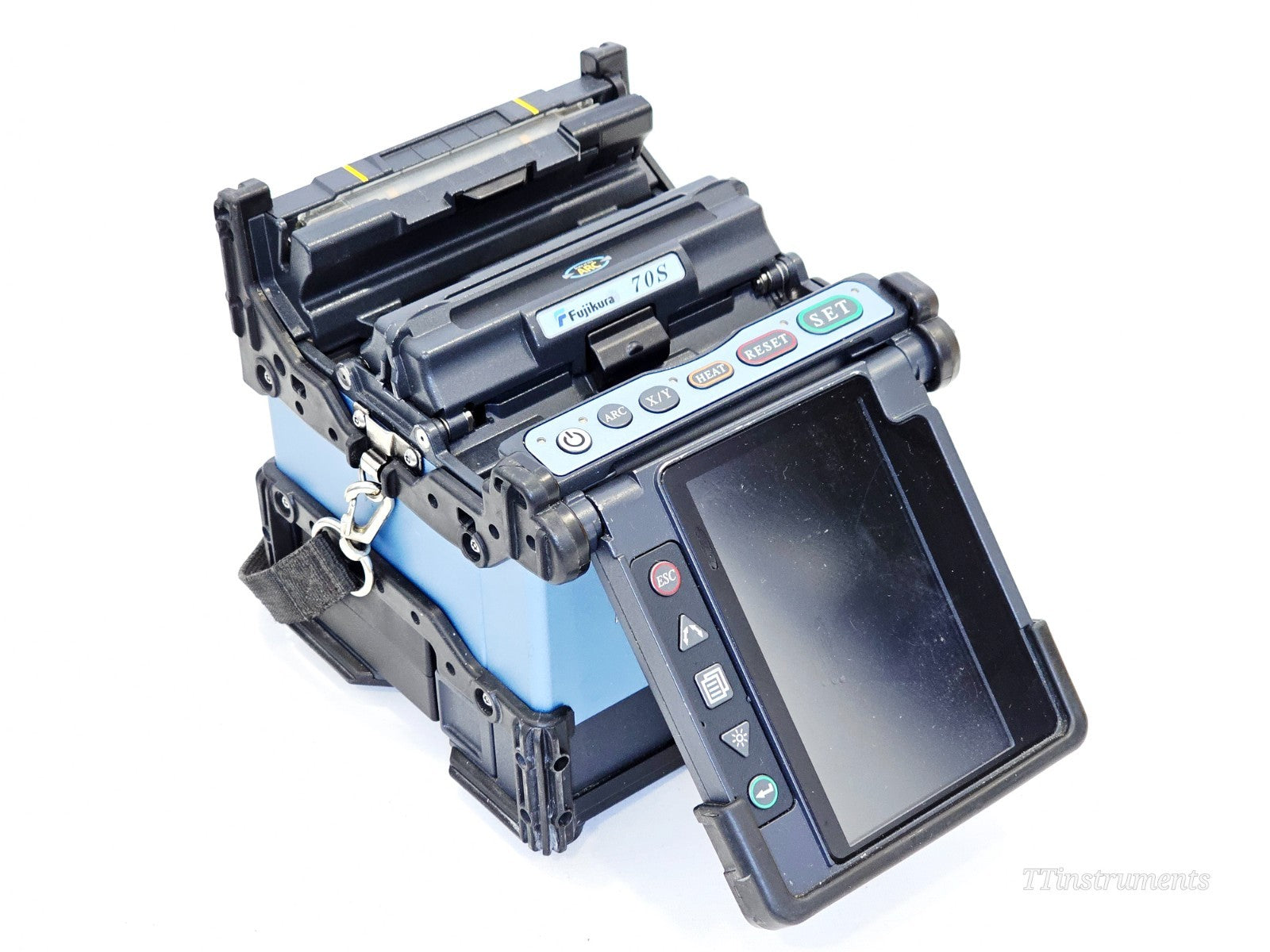
Fusion splicers are used in the field, so cosmetic wear is normal and expected. What matters more is the condition of the components that affect performance. Check the listing images carefully for the condition of the V-grooves, the wind protector, the touchscreen, and the fibre clamps. A cracked or scratched screen doesn't necessarily affect splicing performance but is worth noting. Damage to the V-grooves or splicing chamber is more significant.
Good sellers will photograph the actual unit you're buying rather than stock images, and will note any cosmetic issues clearly in the listing. All our listings at TT Instruments feature photos of the specific unit for sale, with condition noted.
Service history
This is arguably the most important factor and the one most often absent from lower quality refurbished listings. A unit that has been through a proper service centre, with worn parts inspected and replaced and the machine tested and verified, is fundamentally different from one that has simply been cleaned and photographed.
For Fujikura splicers specifically, servicing by a Fujikura-authorised centre is the gold standard. It means the work has been carried out to Fujikura's own specifications using genuine parts. Where applicable, our listings document the service date and the service centre used. This is one of the key reasons we recommend buying from an ISO 9001 certified supplier.
For a fuller explanation of what Fujikura-authorised servicing actually covers, read our dedicated guide to Fujikura fusion splicer servicing.
Firmware version
Worth a quick check, particularly on older models. Manufacturers periodically release firmware updates that improve performance, add support for newer fibre types, and fix known issues. Most modern Fujikura splicers can be updated via USB, so it's not usually a dealbreaker, but confirming the firmware version is current is a sensible step.
What's included
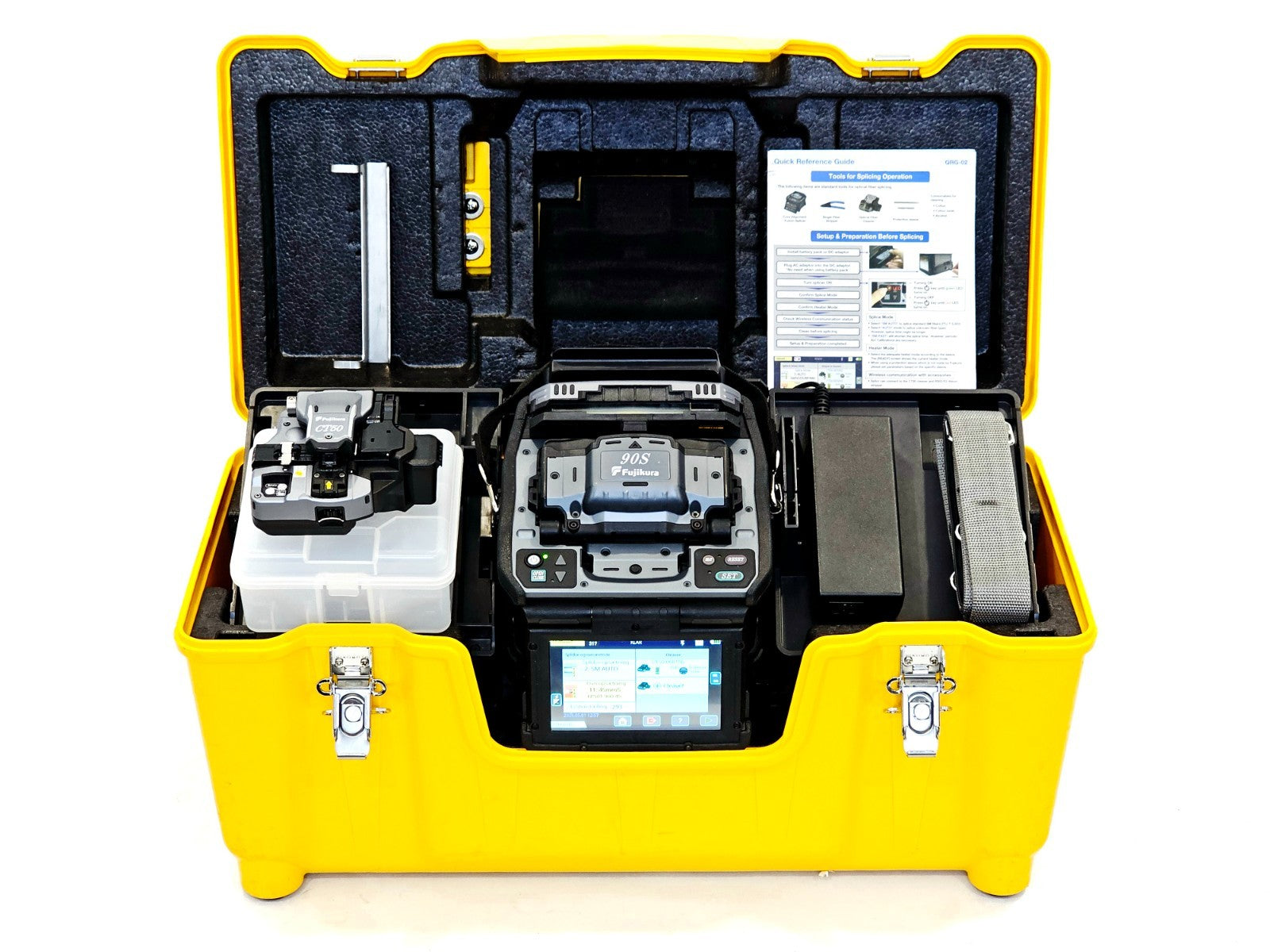
Finally, check exactly what comes with the unit. A fusion splicer without a cleaver is significantly less useful, and cleavers are not cheap. Our listings clearly document everything included in each sale: splicer, cleaver where specified, battery, AC adapter, carry case and any accessories. What you see on the listing is what you receive.
If you're buying from a seller who can answer all of the above clearly and back it up with documentation, you're in a good position. Browse our current range of refurbished fusion splicers, all professionally tested and dispatched from our UK warehouse.